First Trip
First Trip to the Philippines: A Practical Starting Point
A realistic first-trip framework for entry requirements, eTravel, regional routing, transfer days, weather margins, cash, and connectivity.
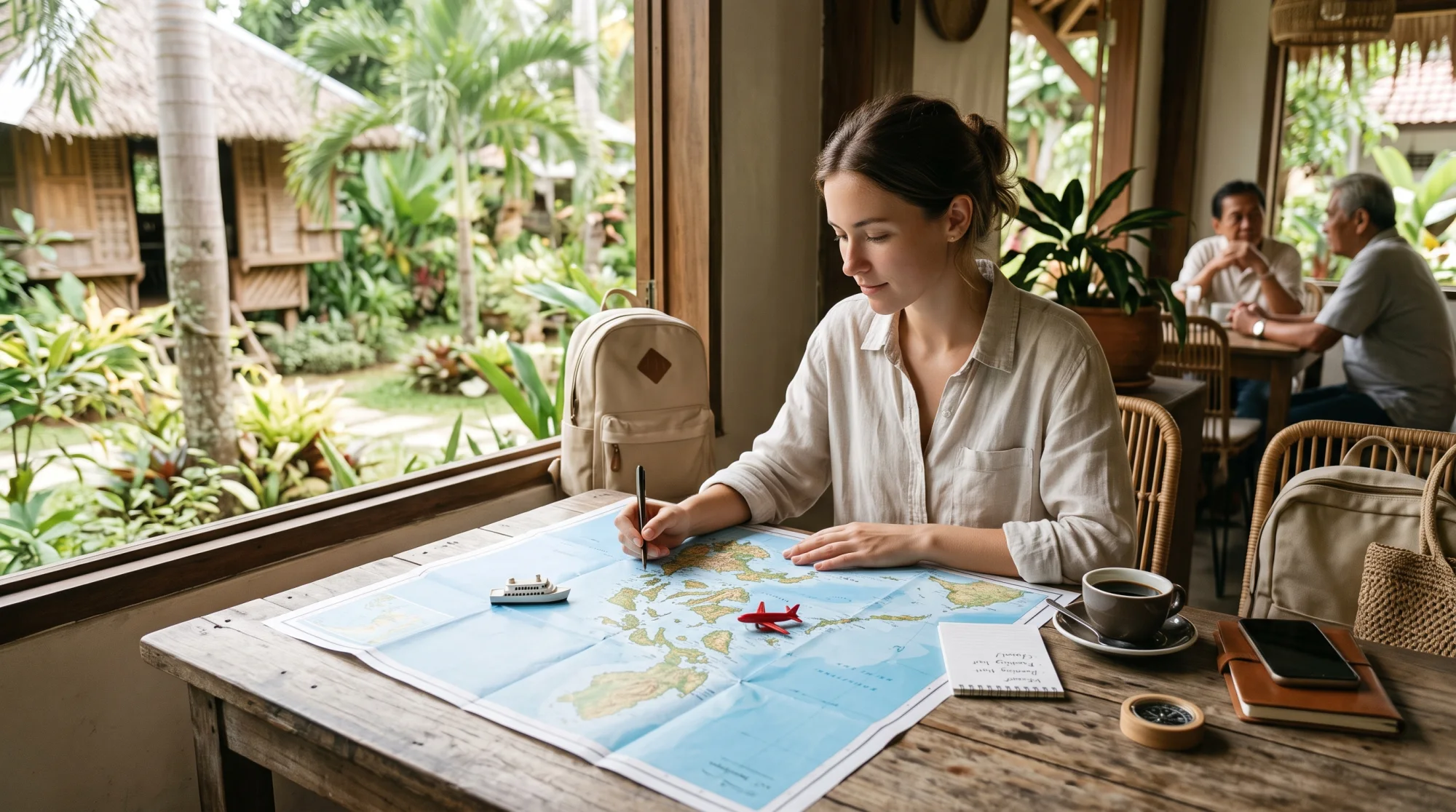
A first Philippines trip becomes difficult when the map is mistaken for the journey. Two islands may look close while the actual transfer requires a hotel checkout, a road trip, a terminal wait, a flight or ferry, another road trip, and a second check-in.
The solution is not to avoid moving. It is to build the route around movement from the beginning. This guide gives you a calm framework for choosing regions, protecting transfer days, arriving legally, and keeping enough flexibility for weather and ordinary delays.
Start with nights, not destinations
Count the nights between your arrival and departure flights. Then remove the first night, the last night, and every major transfer day. What remains is the time you can actually use.
For approximately two weeks, two or three regional anchors are usually enough. Manila, Palawan, and one Visayas or Mindanao destination already create several distinct experiences. Adding more often exchanges mornings on the ground for afternoons in terminals.
Use the Philippines Itinerary Reality Check before buying tickets. It estimates how much of the trip may be consumed by movement and flags routes that leave too few usable nights per destination.
A practical 14-night framework
This is a planning pattern, not a mandatory route:
- Nights 1 to 2: arrive in Manila, recover, get cash and connectivity, and experience part of the city.
- Nights 3 to 7: choose one major island or regional base.
- Night 8: allow for a transfer without pretending it is a sightseeing day.
- Nights 9 to 13: choose one second base with enough time for weather or a slow day.
- Night 14: sleep near the airport used for the international departure.
This pattern protects the trip from a common failure: scheduling an international departure immediately after a domestic island connection. A delayed ferry, road transfer, or domestic flight should not automatically become a missed long-haul flight.
Treat arrival day as a real day
Do not schedule the emotional highlight of the trip immediately after a long international flight. Arrival procedures, baggage, traffic, heat, hunger, and sleep disruption all require attention.
A useful first-day list is intentionally short:
- Reach the correct accommodation without adding another fragile connection.
- Withdraw or exchange a modest amount of Philippine pesos.
- Arrange a working mobile-data connection.
- Save offline copies of reservations and essential addresses.
- Eat, walk locally if conditions allow, and sleep.
Manila does not need to be treated as an airport problem. Our first 48 hours in Manila guide gives the capital room to become part of the trip.
Verify entry requirements for your passport
Entry rules depend on nationality, passport validity, travel purpose, and length of stay. Do not rely on a social post, an old article, or another traveler’s experience as your final authority.
The Philippine Department of Foreign Affairs says many nationalities are eligible for visa-free visits, but the exact eligibility and document requirements must be checked for the passport you carry. Travelers should be prepared to show a qualifying passport and onward or return travel where required. Start with the appropriate Philippine embassy or consulate and the Bureau of Immigration.
For non-visa-required tourists initially admitted for 30 days, the Bureau of Immigration publishes a process for requesting an initial 29-day extension. Its own fee tables warn that charges can change, so use the official visa-waiver page for the current procedure rather than copying a price from an older blog post.
Complete eTravel only through the official site
The Philippine government’s eTravel system combines passenger information used by border agencies. The official registration site is etravel.gov.ph. Registration is free, and the system states that travelers may register within 72 hours before arrival or departure.
Paid look-alike registration sites are unnecessary. Save the official address, complete the declaration inside the permitted window, and retain the generated QR code where it can be reached without airport Wi-Fi.
Choose regions that connect logically
A sensible route is not always the route with the fewest kilometers. It is the route with dependable connections and enough value on both sides of each transfer.
Manila and northern Luzon
These can work well together by road, but traffic and mountain travel make optimistic time estimates dangerous. Do not add Baguio or another northern destination as a casual half-day detour.
Cebu, Bohol, and Dumaguete
These form a natural Visayas cluster, but each sea or road connection still consumes meaningful time. Choose bases rather than changing hotels every night.
El Nido and Coron
These can form a focused Palawan route. Sea conditions and departure timing deserve a full transfer day and buffer. See Palawan without the rush.
Siargao, Camiguin, and other Mindanao-side islands
These places reward time, but combining several of them with Palawan or northern Luzon in a short trip creates expensive travel days. Choose one side of the country unless the trip is long enough to absorb the connections.
Plan for weather by region, not slogan
The Philippines does not experience identical weather everywhere at the same time. A national forecast is only a starting point. Check the region, marine conditions, and route used to reach the destination.
PAGASA reports that the Philippines averages about 20 tropical cyclones within its area of responsibility each year, with roughly eight or nine crossing the country. It identifies July through October as the peak period. That does not mean every trip during those months fails. It means rigid multi-island routing becomes less forgiving. Use PAGASA’s tropical-cyclone information and current advisories when travel approaches.
During any season, keep a flexible night around an important ferry, remote-island departure, or international connection.
Keep money and connectivity boring
Cards are useful in cities, established hotels, and larger businesses. Cash remains important for small transportation, markets, entrance fees, and businesses outside major centers. Do not carry the entire trip budget in one place.
Arrange data early and download what would matter if service vanished:
- Accommodation addresses and phone numbers
- Flight and ferry confirmations
- Offline maps for arrival areas
- Copies of passport and insurance information
- Contact details for the bank and travel insurer
International roaming can be useful as a backup even when a local SIM or eSIM is the primary connection.
Pack for transfers, rain, and heat
Pack so you can move your own luggage over a short uneven distance. Island travel can involve steps, wet surfaces, small vehicles, narrow boat access, and waits without air conditioning.
A practical core includes light clothing, sun protection, rain protection, essential medicine, a small dry bag, secure copies of documents, and footwear that tolerates both heat and water. Keep medication and one change of clothing in carry-on baggage.
Use the detailed Philippines packing list for a fuller checklist.
Do not confuse an old field note with a current instruction
My PH Life preserves travel reports published between 2010 and 2020 because they contain historical and cultural value. Those articles display their original dates and a historical notice. Old ferry schedules, airline procedures, fees, restaurants, visa instructions, and emergency notices should not be used as current operational guidance.
For anything that can prevent entry, strand you between islands, affect health, or cost significant money, confirm the detail with the responsible authority or operator.
The calm first-trip rule
A calm itinerary is not an itinerary with nothing in it. It is one with enough space for the country to arrive.
Choose fewer regions. Protect the first and last nights. Treat transfers as real days. Verify the changing rules at their source. Then leave enough unscheduled time for the Philippines to be more interesting than the plan.