Manila
48 Hours in Manila: A Practical First-Timer Itinerary
A realistic two-day Manila itinerary that groups neighborhoods, accounts for traffic, and turns a stopover into a useful introduction to the capital.
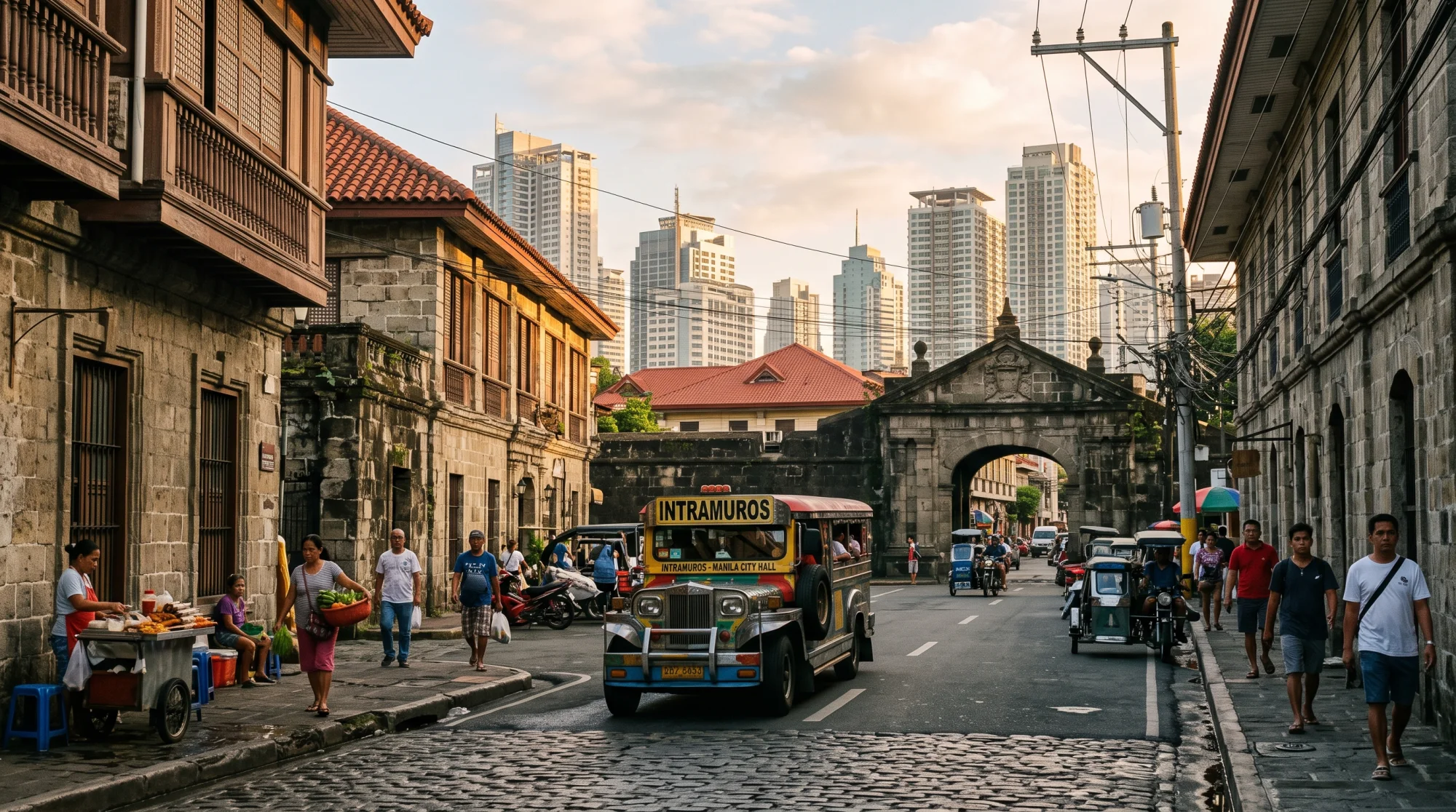
Manila makes more sense when you stop treating it as one compact city. Metro Manila is a collection of business districts, historic neighborhoods, residential areas, and separate local governments joined by roads that can change character by the hour. The solution is not to race across all of them. Group each day geographically and leave slack.
Where to stay for a short visit
Ermita or Malate puts the old city and museums within easier reach. Makati is practical for dining, shopping, and a polished city base. Bonifacio Global City offers walkable blocks and modern restaurants but sits farther from the historic core. Pasay can make sense for a very short airport-dependent stay, although it is not the best base for every attraction.
Do not choose a hotel only by its straight-line distance from a landmark. Look at the route, expected arrival hour, and the airport terminal you will actually use.
Day one: Manila’s historic core
Morning: Intramuros
Start early in Intramuros before heat and traffic build. Walk the walls and streets slowly enough to understand the layers: Spanish colonial planning, wartime destruction, reconstruction, churches, schools, government buildings, and everyday city life. Fort Santiago is the natural anchor. Dress for sun and sudden rain, and wear shoes that can handle uneven surfaces.
Midday: museum district
Cross toward the National Museum complex and choose the collection that best fits your interests rather than trying to sprint through every building. Philippine history, fine arts, anthropology, and natural history each deserve more than a quick photo stop. Verify current opening days before visiting because schedules can change.
Afternoon and evening: Binondo
Continue to Binondo for a food-focused walk. Build the route around a few dishes instead of a checklist of viral shops. Popular counters can have long lines, so keep alternatives nearby. Ongpin and the surrounding streets are busy working neighborhoods. Keep valuables secure, cross carefully, and remember that a food walk is more enjoyable when portions are shared.
Day two: choose one modern Manila
Option A: Makati
Makati works well for galleries, cafés, parks, shopping, and restaurants concentrated around manageable districts. The Ayala Museum area can provide context that complements day one. Nearby neighborhoods show a more lived-in side of the city once you move beyond the malls.
Option B: Bonifacio Global City
BGC is the cleaner-lined, newer face of Metro Manila. It is easy to navigate on foot within the district and suits travelers who want public art, contemporary dining, and a low-friction second day. It is not representative of the entire metropolis, which is exactly why pairing it with Intramuros creates a useful contrast.
Option C: Quezon City
Choose Quezon City if a specific museum, university, restaurant, or event draws you there. It is too large to add casually to an already full cross-city itinerary. Make it the main plan for the day.
Getting around without losing the day
- Rail: Useful on routes that align with the network, but stations and transfers may not match the exact attraction.
- Ride-hailing or taxi: Practical door to door, with journey times that still depend on traffic.
- Jeepneys and buses: Valuable for experienced city travelers and short known routes. Learn the destination sign and where to alight before boarding.
- Walking: Excellent within Intramuros, parts of Binondo, Makati, and BGC. Less useful between distant districts.
The practical jeepney guide explains fares, route signs, and basic etiquette. Keep small bills and coins, and avoid displaying a phone loosely beside an open vehicle window.
Airport planning is part of the itinerary
Confirm the terminal with the airline, not with an old blog post or a remembered assignment. Terminals and operating arrangements can change. For separate tickets, consider a night near the departure gateway. A domestic arrival and an international departure on the same day can fail because of weather, congestion, baggage delays, or a terminal transfer.
Do not schedule a museum, restaurant reservation, or cross-city errand immediately before a flight. Manila traffic is variable, and an uneventful trip last week is not a guarantee today.
Common first-timer mistakes
- Planning by map distance instead of travel time
- Putting Intramuros, Makati, BGC, and Quezon City into one day
- Assuming every attraction opens daily
- Carrying only large banknotes for small transport and food purchases
- Booking a tight self-transfer between separate airline tickets
- Judging the entire Philippines by the airport corridor
If you have only one day
Choose Intramuros, one museum, and either Binondo or a sunset stop near Manila Bay. Skip the modern districts unless that is your main interest. If you have three days, add one modern district and keep the third day flexible for a deeper neighborhood visit or recovery from travel.
Use the itinerary reality check before adding Manila to a multi-island route, and read the first-trip guide for arrival requirements, weather planning, money, and connectivity.