Field Note
How to Ride a Jeepney in the Philippines: A Practical Guide
Learn how jeepney routes, fares, payments, signals, safety, and etiquette work before using this iconic form of Philippine public transport.
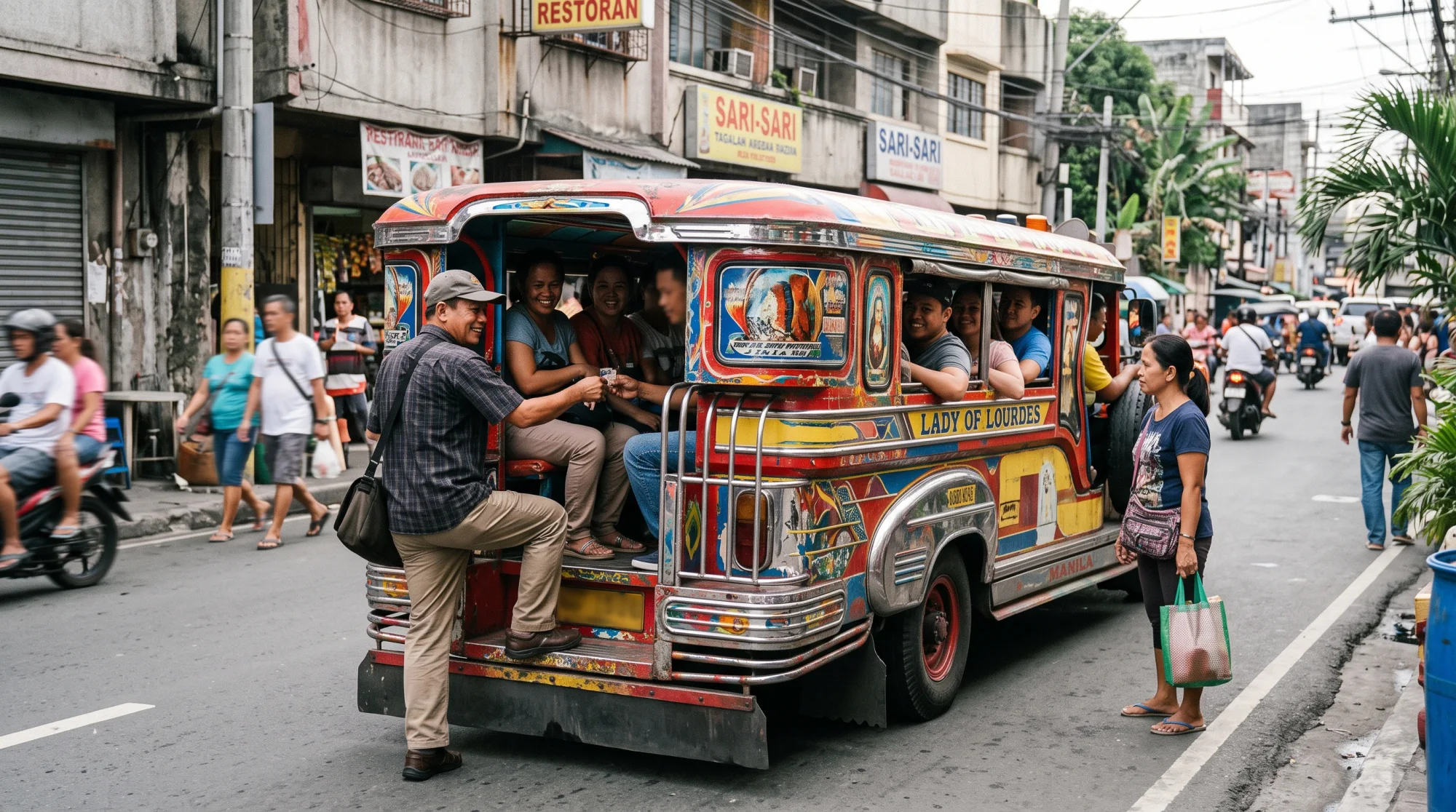
A jeepney trip is easier when you understand that it follows a route, not a private destination request. The signboards show major stops or corridors, passengers board and alight along the route where local rules allow, and payment is usually handled inside the vehicle. Modernized units may use different doors or payment methods, but the same principle applies: confirm the route before boarding.
Step 1: identify the route
Jeepney signs usually list endpoints and important places along the way. A sign can be accurate without showing every street or stop. Maps may not capture route changes, loading areas, or one-way traffic arrangements.
Ask a specific question: “Does this pass the public market?” is better than “Is this going downtown?” Show the destination name written on your phone if pronunciation is difficult, but keep the phone secure while standing beside traffic.
Step 2: know where to board
Some routes use terminals or designated loading areas. Others pick up passengers along a corridor. Watch what local passengers do, but do not stand in a traffic lane. In managed areas, follow signs and staff directions even if a vehicle appears willing to stop elsewhere.
Step 3: board safely
Wait until the vehicle has stopped. Watch your head and footing, keep bags close, and move into an available seat without blocking the entrance. Traditional jeepneys can have inward-facing benches and a low roof. Modern units may resemble minibuses with a different entrance, standing space, air conditioning, or electronic payment.
Step 4: pay the fare
On many traditional jeepneys, passengers pass cash forward until it reaches the driver, and change returns the same way. Say the number of passengers and the destination. Exact fares vary by route, distance, vehicle type, and current regulation, so ask rather than relying on an old article.
Carry coins and small banknotes. Giving a large note during a busy trip creates an avoidable problem and makes it harder to notice the correct change. Some modern services use cards, tickets, or conductors.
Step 5: signal your stop
“Para po” politely asks the driver to stop. Say it with enough notice for a safe stop. If you do not know the exact location, ask the driver or another passenger to alert you near the landmark. GPS can help, but position drift and unfamiliar street names are common, so use it as a second check.
Useful phrases
- Dadaan po ba sa…? Does this pass…?
- Magkano po hanggang…? How much to…?
- Bayad po. Fare payment.
- Para po. Please stop.
- Pakisabi po kapag malapit na. Please tell me when we are near.
The word “po” adds politeness. Perfect grammar is not required. A clear landmark and a respectful tone are more useful.
Safety and comfort
- Keep wallets and phones secure, especially beside open windows or entrances.
- Do not ride on the exterior or in a position that lacks safe seating.
- Avoid displaying cash while counting it.
- Allow extra time. Traffic and waiting vary.
- Use another mode late at night or in an unfamiliar area if the route and drop-off are uncertain.
- Follow local mask, queue, and accessibility rules where posted.
Etiquette
Move down the bench when space is needed. Keep bags off a seat when the vehicle is filling. Help pass fares and change, then return them promptly. Avoid loud calls, speaker audio, or food that creates a mess. Offer practical space to an older person, pregnant passenger, child, or passenger with a disability when you can do so safely.
Accessibility realities
Traditional jeepneys can be difficult for travelers with limited mobility, large luggage, visual impairments, or balance concerns. Steps may be high, headroom low, and stops informal. Modernized units improve some conditions but are not uniform. A taxi, ride-hailing car, accessible van, or prearranged transfer may be the more dependable option.
Jeepney or another mode?
Use a jeepney for a known corridor when time is flexible and luggage is light. Use rail when the stations align with the trip, a bus for longer corridors, and a car or arranged transfer when carrying baggage or making a flight. Public transport is not a test of authenticity. The right choice is the one that fits the passenger and the journey.
A simple first ride
Try a short daytime route with a clear landmark and no deadline. Ask the accommodation desk where to board and which sign to look for. Pin the destination, carry small money, and sit where you can communicate with the driver. Once the route logic is familiar, longer rides become much less intimidating.
For a wider transport strategy, read the Philippines route-planning guide. If Manila is your first stop, the 48-hour Manila itinerary shows where a jeepney may or may not fit.